How Smart Rings Track Your Health
September 10, 2026 · by Aiullain Team
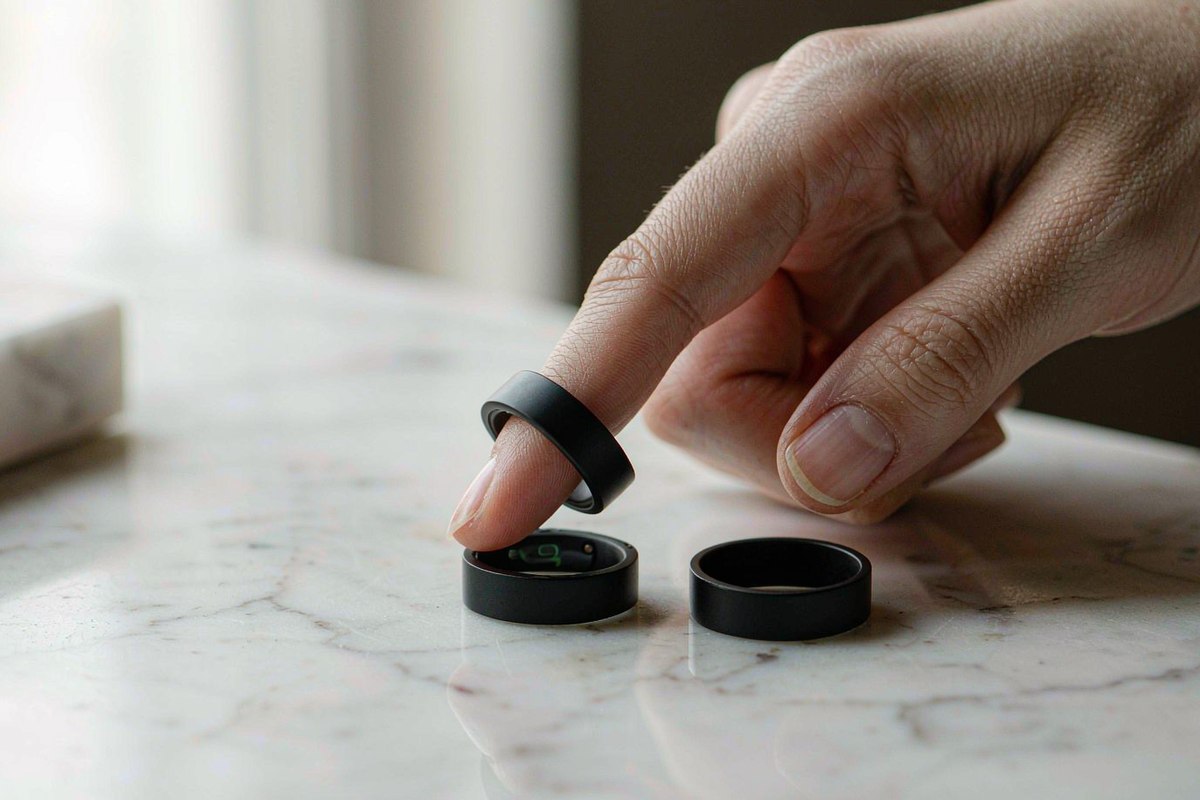
A smart ring packs a full physiological lab into 3 grams of titanium. Understanding how it works explains both its strengths and its limits — useful knowledge whether you're buying, selling, or building one.
The Sensor Suite
Inside the ring's inner chamber sit infrared and red PPG emitters paired with photodiodes. Infrared light penetrates deeper into tissue, reading blood-volume changes even during sleep positions that would break a wrist device's signal. A 3-axis accelerometer captures movement; a temperature sensor tracks skin-temperature variation.
From Photons to Sleep Scores
The finger's arterial supply produces a remarkably clean pulse signal. Algorithms combine pulse-interval analysis (heart rate and HRV), motion data and temperature trends to stage sleep into light, deep and REM phases, then synthesize a morning readiness summary.
Why HRV Matters
Heart-rate variability — the beat-to-beat variation of the heart — reflects autonomic nervous system balance. Rising HRV generally signals recovery; suppressed HRV flags stress, illness onset or overtraining. It's the single metric most recovery-focused users check daily.
The Miniaturization Trade-Offs
Every milligram counts. Battery capacity versus ring thickness, sensor window size versus signal quality, and thermal design versus skin comfort — each is a negotiated compromise. This is where an experienced ODM's engineering choices show up in the user experience.
What's Next
Blood-pressure estimation from pulse-transit proxies, cuffless calibration routines and richer multi-wavelength sensing are all in active development across the industry — including on our own platform roadmap.
The ring's superpower is compliance: the best sensor is the one people actually wear.
Curious about developing a branded smart ring? Explore our PulseRing platform or contact us for ODM options.
Working on a Wearable Project?
Talk to the engineers behind these insights — inquiry replies within one business day.
Contact Aiullain